
Modifications - Boost Control


The real key to power on the Mitsubishi 6G72 is boost. Boost controllers allow you to raise this, creating more horsepower. This modification yields extremely noticible results. For best results, do not jump to this step before completing the above. With a stock fuel system on premium unleaded fuel, exceed 15 psi of boost at your own risk. Knocking or pinging due to detonation will surely result. This condition can cause severe internal engine damage. Expected gains can be twenty (20) to fifty (50) horsepower.
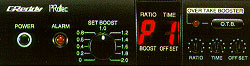
GReddy Profec A
This boost controller features fuzzy logic, adjustability in boost response, and a metric readout of boost pressure. Most people seem to have had good results with this boost controller although complaints of overboost spikes are not uncommon. Also, one safety feature that it has tends to become more of an annoyance than anything. There is an alarm that can be set to go off at a certain boost level; when it goes off, the car is reduced to stock boost levels. This controller allows adjustment of the boost response, either coming on fast and then dropping, coming on slow but holding, or somewhere in between.
|
Greddy Profec A |
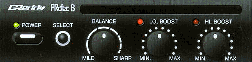
GReddy Profec B
Closely resembling the HKS EVC II, this boost controller features manual adjustment via two knobs on the front of the unit and is nitrous-friendly because of the lack of fuzzy logic.
|
Greddy Profec B |
HKS EVC II
The HKS EVC II has been one of the staples of turbocharged cars for a long time although it is no longer in production. Historically it provides extremely consistent results. It has three buttons on the front, low boost, high boost, and manual boost, and a bargraph representation of boost. To adjust either low or high boost, analog screws are turned on the back of the unit. Manual boost is controlled via a knob on the front of the unit and allows on the fly changes and precise tuning. There is no adjustment for boost response.

|
HKS Electronic Valve Controller IV |
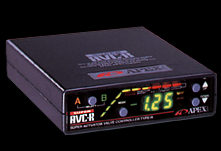
Apex'i AVC-R
This boost controller features a metric readout on the front which shows boost pressure, a percentage readout that shows injector duty cycle, ability to learn boost characteristics, low and high boost settings, and response settings. One complaint users have had about the AVC-R is difficulty to set up and program. This is primarily due a safety feature of the AVC-R not present in other controllers. Above 6200 RPM the controller will not learn the boost curve and will bleed off boost if the injectors are being pushed beyond safe levels. This situation is easy to achieve with stock injectors and high boost levels.
|
Apex'i AVC-R |
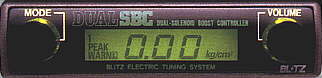
Blitz DSBC
This boost controller features a dual solenoid design which provides better response and increased boost pressure. Boost pressures are determined by pre-set ratios or percentages. This eliminates the need to cycle the car through several test runs to determine correct boost pressure.
|
Blitz Dual
Solenoid Boost Controller |
The Peak Hold feature is used to record the highest boost reading. This greatly reduces the guess work when an overboost situation occurs. This feature combined with a digital boost meter, both a visual and audible warning function, a limiter and scramble feature, along with fource programmable channells to set your boost makes this boost controller well worth considering.
Bleeder / Restrictor Valve
Bleeder and restrictor valves allow you to retain the stock boost controller, but modify the vacuum pressure that it sends to the wastegate (which controls the turbo's maximum boost pressure.) When using one, a boost gauge absolutely must be present to monitor boost pressure. Unfortuntely, with few exceptions, bleeders and restrictors are not as consistent as most electronic boost controllers. Walmart sells a bleeder in their aquarium bleeder by Aquaculture that many use with varying results. Its part number is 1156A and is labeled "Brass Aquarium Valve." One of the examples of more advanced bleeders is the Halman Manual Boost Controller. It's opening changes depending on the vacuum system of the car and many claim provides response as good as or better than electronic boost controllers. It is available through Buschur Racing at http://www.buschurracing.com.